
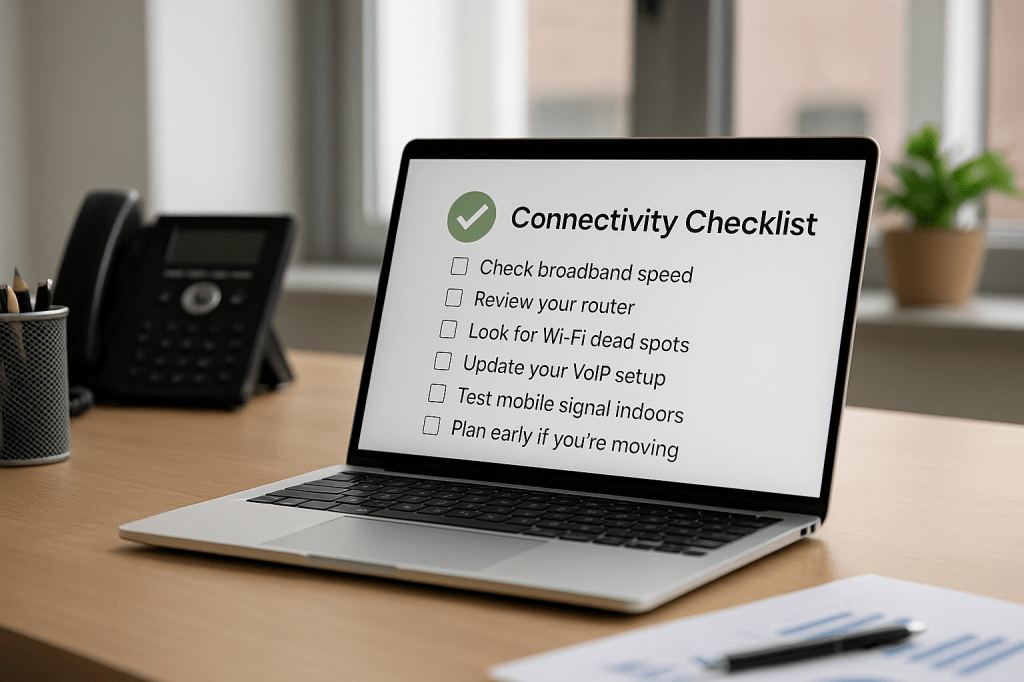
As we move towards 2026, many businesses are taking stock of their equipment, systems, and day-to-day processes. One area that often gets overlooked — but quietly underpins everything — is connectivity. A stable, well-planned setup keeps operations smooth, customers satisfied, and staff working without interruption.
A little preparation now saves a great deal of frustration later. Here are the key checks every business should consider before the new year arrives.
1. Make Sure Your Broadband Speed Still Matches Your Needs
Most businesses naturally grow their digital demands over time. You might be running more cloud services, more VoIP extensions, or more staff devices than you did a year ago. Run a speed test and compare your results with what you’re paying for.
If you’re close to the limit, it may be time to review your package so that 2026 starts on solid ground.
2. Review the Age and Condition of Your Router
Many issues blamed on “the broadband” actually come from old, tired routers. If your equipment has been in place for years, upgrading to a modern business-grade unit can improve stability, Wi-Fi coverage, and overall performance.
It’s one of the simplest ways to reduce day-to-day faults.
3. Check Your Wi-Fi Layout
Office layouts evolve — new desks, partitions, storerooms, and repurposed spaces can change how Wi-Fi travels through a building. It’s sensible to check for slow spots, signal drops, or areas where staff struggle to stay connected.
A quick survey often reveals where an extra access point or a small tweak would make a big difference.
4. Review Your Hosted VoIP Setup
If you use VoIP (and most businesses do now), it’s worth checking:
- Are all numbers and hunt groups still correct?
- Are unused licences costing you money?
- Do you need call recording, reporting, or mobile app access?
- Has your team changed, requiring new extensions or call flows?
A quick review keeps your phone system tidy and efficient going into the new year.
5. Check Mobile Coverage Across the Office
Many staff rely on mobile signal for work — emails, two-factor authentication, softphones, and more. Walk the premises and check for any dead zones. Changing networks, adding a mobile signal booster, or switching to a business mobile plan may be worthwhile.
6. Confirm Any Lead Times if You’re Planning a Move
If you’re relocating in 2026, connectivity should be one of the first things you look at. Broadband availability, fibre lead times, and number porting windows all take longer than people expect. Early checks prevent last-minute stress and expensive delays.
7. Speak to Your Local Provider Before the New Year Rush
The busiest period for broadband providers is often January and February. A brief conversation now can identify any weak spots early — whether it’s speed, equipment, VoIP setup, or future plans.
A little planning now helps avoid unnecessary disruption in the months ahead.
In Summary
Preparing for 2026 doesn’t require major changes — just a few sensible checks to ensure your connectivity is ready for another year of business. Reliable internet, a tidy VoIP setup, and up-to-date equipment make day-to-day work much smoother.
BusinessConnectivity #2026Planning #OfficeSetup #Broadband #VoIP #WiFi #UKBusiness #HullBusiness #HumberRegion #EastYorkshire #KTGL #TechCheck
 ktgl.co.uk
Leave a comment