
When a business orders a new internet connection, there is often a sense that once the line is live, the job is done.
In reality, that’s only the beginning.
A proper internet installation should involve more than simply plugging in a router and hoping for the best. Connectivity now underpins almost every part of modern business — from cloud systems and VoIP telephones to remote working, CCTV and payment terminals.
Getting the installation right from the start can prevent many problems later.
It Starts with Understanding the Business
Before any equipment is installed, the most important step is understanding how the connection will actually be used.
For example:
- How many staff will rely on the connection?
- Are cloud applications used heavily?
- Will voice calls run over the internet?
- Are remote workers connecting in?
- Is there any need for guest WiFi?
Without this context, even a fast connection may not deliver the performance the business expects.
The Router Matters More Than Many People Realise
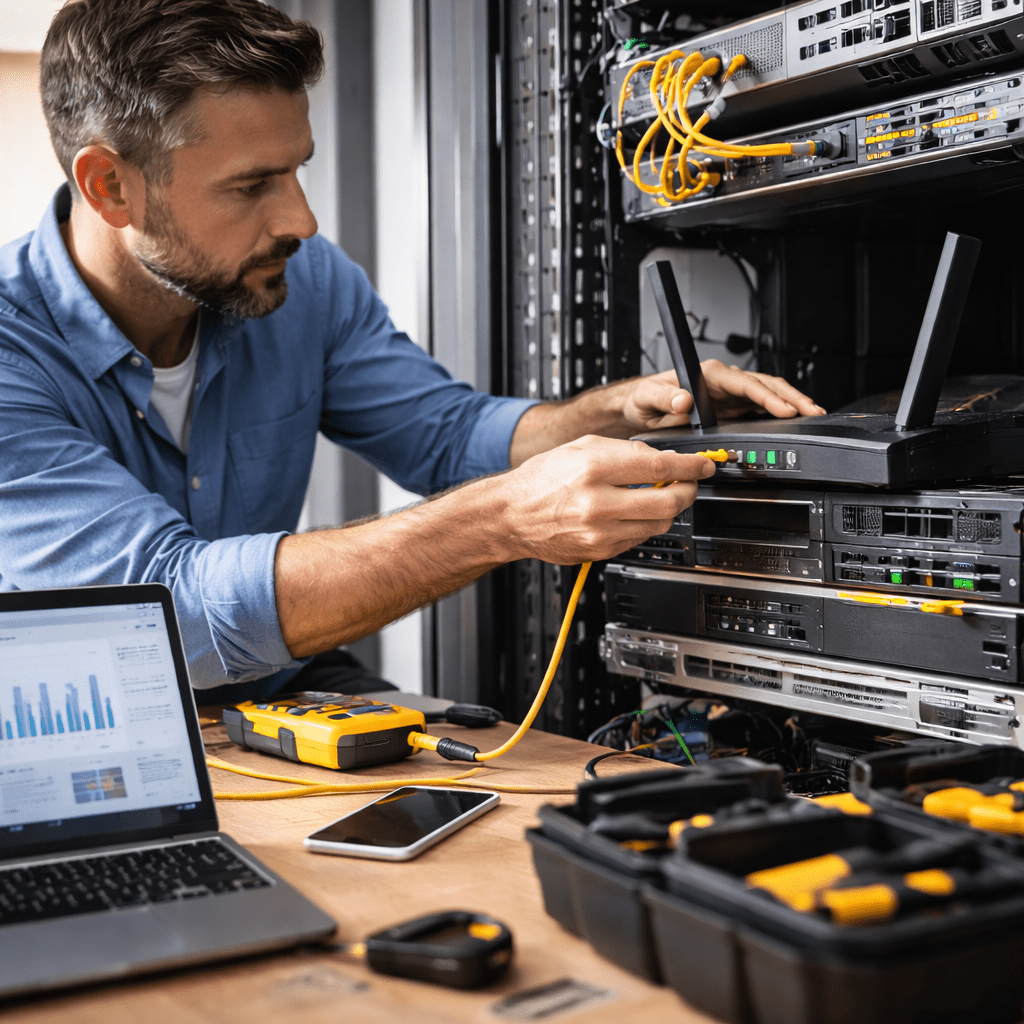
The router is the gateway between the outside network and the internal business systems.
A proper installation should include:
- A reliable business-grade router
- Secure configuration
- Firewall protection
- Quality of Service (QoS) settings where required
- Remote management capability for support
Cheap or poorly configured routers are a common cause of slow performance, unstable connections and security issues.
Internal Network Setup Should Be Checked
The broadband connection itself is only one part of the network.
Internal infrastructure also plays a major role in performance. A proper installation should review:
- Network cabling
- Switches
- WiFi access points
- Device placement
- Coverage throughout the premises
Weak internal networks often get blamed on the broadband connection when the real problem lies inside the building.
WiFi Needs Planning, Not Guesswork
Many businesses rely almost entirely on wireless connectivity.
Yet WiFi coverage is often left to chance.
Walls, floors, machinery and building layout can all affect signal strength. A professional installation should consider:
- Placement of access points
- Coverage areas
- Interference from other networks
- Capacity for the number of devices connected
Good WiFi design can make a dramatic difference to day-to-day productivity.
Security Should Never Be an Afterthought
Every internet connection introduces a potential entry point to the business network.
Basic security measures should always be part of the installation, including:
- Secure passwords
- Firewall configuration
- Guest network separation
- Regular firmware updates
These are simple steps but essential ones.
Planning for Resilience
Finally, it is worth considering what happens if the connection fails.
Many businesses now rely so heavily on connectivity that even a short outage can cause disruption.
Options such as backup broadband connections or mobile failover can help ensure continuity.
The Value of Doing It Properly
A proper installation may take a little more time and thought at the outset, but it usually prevents far greater disruption later.
When connectivity is set up correctly, it simply works — quietly supporting the business in the background.
And that is exactly how it should be.
Rod Walker
Tel: 01482 291292
Email: rod@ktgl.co.uk
Web: http://www.ktgl.co.uk
#BusinessBroadband #Connectivity #ITInfrastructure #VoIP #LocalBusiness
 ktgl.co.uk
Leave a comment