
The way businesses use technology has changed significantly over the past few years, and one of the biggest shifts has been in what staff expect from their workplace systems.
Before 2020, many office environments followed fairly predictable patterns. Most work took place inside the office, phone systems were often tied to desks, and access to business systems was largely limited to the company network.
That landscape has changed.
Today, staff expectations around connectivity, flexibility and technology are very different.
Flexibility Is Now the Norm
Remote and hybrid working have become much more common. Even businesses that operate primarily from a central office now expect systems to support flexible working when required.
Employees increasingly expect to be able to:
- Access files from different locations
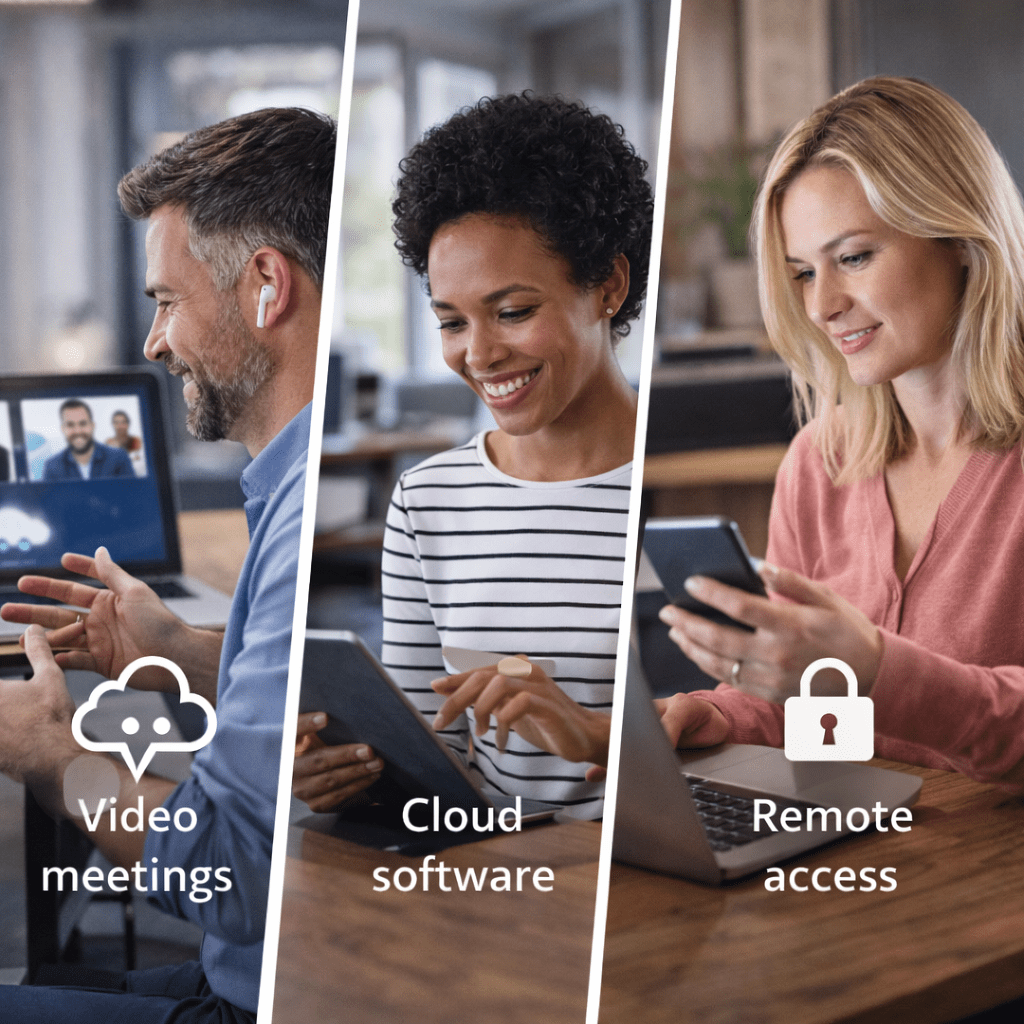
- Join video meetings from anywhere
- Use cloud-based applications outside the office
- Stay connected through mobile devices
For many organisations, this flexibility has become part of normal business operations rather than an exception.
Communication Has Evolved
Traditional desk phones were once the centre of business communication. While they are still widely used, many businesses now rely on internet-based phone systems that allow calls to be answered on multiple devices.
VoIP platforms have made it possible for staff to handle calls from their desk phone, laptop or mobile device while keeping the same business number.
This has changed how teams communicate internally and externally.
Reliability Is More Visible
As staff rely more heavily on online systems, connectivity issues become more noticeable.
When cloud software, video meetings or VoIP calls are interrupted, it affects day-to-day productivity in a very visible way.
As a result, staff expectations around reliability have increased. A stable and consistent internet connection is now viewed as a basic requirement rather than a luxury.
The Office Network Matters More
Many offices were originally designed around relatively simple connectivity needs.
Today’s workplaces often support:
- Multiple devices per employee
- Cloud-based software platforms
- High-definition video meetings
- Wireless connectivity throughout the building
This places greater demands on the internal network, including WiFi coverage, router capability and network capacity.
Technology Should Support the Business
Perhaps the most important change is that technology is now expected to work seamlessly in the background.
Staff want systems that allow them to work efficiently without constant interruptions or technical complications.
When connectivity and communication systems are designed well, they simply support the business without drawing attention to themselves.
Looking Ahead
The expectations that have developed over the past few years are unlikely to reverse.
Flexible working, cloud services and internet-based communications are now firmly established in many organisations.
For businesses reviewing their connectivity and telecoms setup, it is worth considering not only current needs but also how staff expectations may continue to evolve.
Ensuring the right infrastructure is in place helps businesses adapt smoothly as the way we work continues to change.
Rod Walker
Tel: 01482 291292
Email: rod@ktgl.co.uk
Web: http://www.ktgl.co.uk
#Connectivity #VoIP #BusinessTechnology #LocalBusiness #EastYorkshire
 ktgl.co.uk
Leave a comment